Pages

Friday, July 31, 2015

Friday Photo - Mile a Minute Murphy

Charles "Mile a Minute" Murphy breaking the one minute barrier for the cycling mile record
Near the end of the 19th century, a number of different cyclists held the one mile record for cycling behind a pacing vehicle (usually a motorcycle). One of those was Indy's own Major Taylor. In addition to being a powerful cyclist, it required a fast pacing vehicle, which was hard to find in 1899. A cyclist named Charles Murphy realized there was a pacing vehicle that would let him obliterate the record: A locomotive. Obviously a cyclist cannot ride over railroad ties, so he got the Long Island Rail Road to lay planks between the rails for two miles.

The record attempt was extremely dangerous. If Murphy fell too far behind the train, turbulence would probably knock him off the boards. A bicycle wreck at 60 milers per hour would almost certainly be fatal. In addition, the wooden planks were vibrating due to the passing of the trail. Murphy also reported the train kicked up a " Terrible storm of dust, pebbles, hot rubber and cinders." Nonetheless, he was able to travel one mile in 57.8 seconds, and became forever known as "Mile a Minute" Murphy. When he heard about Murphy's exploit, Major Taylor indicated he wanted nothing to do with riding behind trains.

Wednesday, July 29, 2015

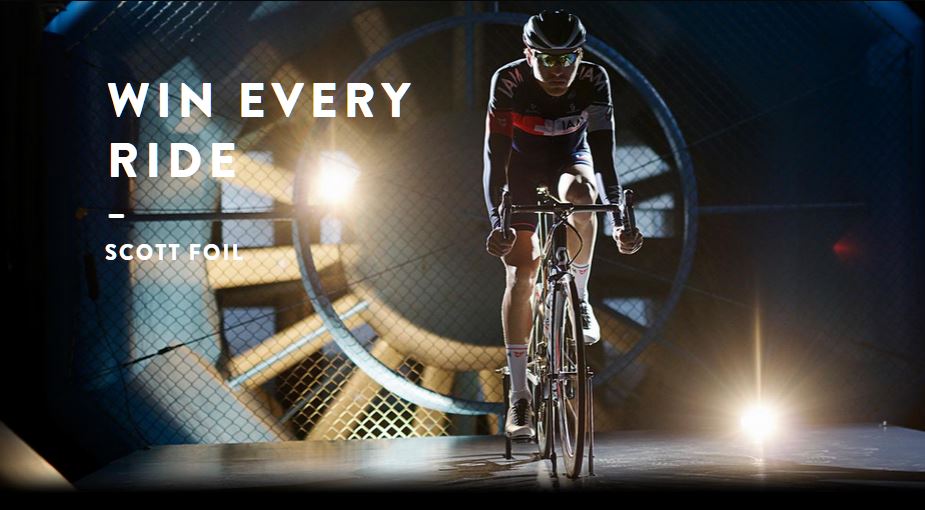
NEW 2016 Scott Foil Has Been Designed To Win Every Ride!

The 2016 Scott Foil has been first across the finish line in 134 races at the highest level of cycling.


Since its introduction back in 2010, heaps of races have been won on the Foil. To date (April 2015), the Foil holds 15 Grand Tour stage wins and three Classics. The Foil has been first across the finish line in 134 races at the highest level of cycling. The new Foil has been designed to win every ride! Regardless of whether you’re competing, chasing a virtual segment or taking on your riding buddies in an imaginary sprint finale, the Foil is the ultimate machine for those striving to win.


The new Foil features the same lightweight frame characteristics as its predecessor. With a frame weight of 945g and a fork weight of 335g (size Medium, including small parts ) the new Foil is one of the lightest Aero Bikes on the market. Our World Tour riders count every gram. 6.8 kilograms is a magic number for them and despite its aerodynamic and stiff nature, it’s actually not a challenge to build the complete bike below this regulatory threshold.

The frame aerodynamics of the bike have been reworked as a whole: all the vertical sections of the frame have been optimized independently and in conjunction with each other, component integration has been lifted to a new level and the bike features a fully integrated cockpit that saves precious watts. Aside from the visible design enhancements with regards to aerodynamics and integration, the riding comfort of the new Foil has been elevated noticeably. The new Foil keeps the much appreciated characteristics of the original model but adds novel and innovative solutions to make it faster as a whole: It’s a Speed Update!


Compared to its predecessor, the new Foil saves an average of 6 Watts over the tested yaw spectrum. This equates to a gain of 27 seconds over 40 kilometers with an average speed of 45kph. Yet speed was not the only consideration. The new Foil increases bottom bracket stiffness by 13% and torsional head tube stiffness by 13.5%. Vertical compliance of the seat tube area was increased 86%. All of this in frame weighing just 945g (size medium). The fork weighs in at an additional 335g.


The new Foil features a Shimano Direct Mount rear brake which is fitted below the bottom bracket. The lowered seatstays and the removal of the caliper brake bridge between the seatstays decreases the gap behind the seat tube and the seatstays avoiding air stagnation and consequently drag. In addition, the seatstay attachment to the downtube has been carefully designed with regard to aerodynamics in order to improve the airflow around this area of the seatstays.


The airflow that meets the fork blades and seatstays has been disturbed by the spinning wheels and in the case of the seatstays as well by the moving rider’s leg. In-depth CFD analysis has shown that at low yaw angles the airflow is pushed away from the fork blades and seatstays if they exhibit a slight outward orientation. The fork blades and seatstays of the new Foil have been optimized in that regard resulting in an advantage at yaw angles between 3 and 5 degrees.


The new Foil’s down tube diameter increases towards the bottom bracket. This positively affects the BB stiffness. And Scott claims that wind tunnel tests have shown that, compared to a straight down tube, these characteristics improve the aerodynamic performance.


The all-new, fully integrated RR1.0 cockpit from Syncros was developed in conjunction with the new Foil and adds to the aerodynamic excellence of this bike. Its superior aerodynamic properties stem from its aero-optimized shape which includes an F01 profile on the horizontal part of the bar along with state-of-the-art integration possibilities. Full integration of brake cables, mechanical and electronic shifting cables and Shimano’s Di2 junction box ensure a smooth transition between the cockpit and the frame, a clean look and aerodynamic cable routing. Despite the aerodynamic bar design which even features a recess to ensure a smooth transition between the bar tape and the grippy top area of the bar where no bar tape is needed, the Syncros Aero RR1.0 Cockpit has been designed following ergonomic principles. Another major advantage of this integrated carbon cockpit is the ability to specifically tailor the performance of the carbon structure on one piece. Towards the connection with the bar, the stem flares out into a triangulated section which offers a larger contact point for the bar to maximize rigidity and resist twisting.


Stay tuned to our blog for more bike and product reviews!


Circle City Bicycles and Fitness
5506 Madison Ave.
Indianapolis, IN 46227
(317) 786-9244
Tuesday, July 28, 2015

What Features Do Road Bikes Come With?

Confused About the Types of Bikes We Have Available? This Should Help.


Aluminum Frame? Carbon Frame? What's the difference?

1x11 drivetrain? 2x10 drivetrain? Which is better for what and why?

Check out this short video by Bill Hannah about the different types of road bikes and which would be the best for you.

While you're at our YouTube channel you will find Bike Reviews and other Informational videos!


Circle City Bicycles and Fitness
5506 Madison Ave.
Indianapolis, IN 46227
(317) 786-9244

Monday, July 27, 2015

Chris Froome Wins Tour de France

Chris Froome and Team Sky celebrating victory as they cross the finish line
In an impressive performance, especially through the Pyrenees and Alps, Chris Froome won the Tour de France and the King of the Mountain competition as well. Peter Sagan won his fourth straight green jersey with consistent performances, although he did not win an individual stage. Nairo Quintana finished second overall, and also took home the white jersey, awarded to the top rider 25 years or under. He made a valiant try for the overall victory on the final climb up Alpe d'Huez on Saturday, but couldn't claw back enough time on Froome.

Last year's winner, Vincenzo Nibali, got off to a poor start in the first week of the Tour, but came back strong in the final week, finishing fourth behind Alejandro Valverde. Alberto Contador finished fifth. American Tejay van Garderen was having a great Tour de France, in third place, when he had to abandon the race on Wednesday, the first day in the Alps, due to a respiratory infection.

Thanks to everyone who made our Tour de France Sale a big success!

Friday, July 24, 2015

Friday Photo - Tour de France Publicity Caravan

Part of the Tour de France publicity caravan
As the Tour de France comes to its conclusion, Chris Froome has a solid lead going into Saturday's stage up Alpe d'Huez. This will be the final competitive day of the tour for the overall title. By tradition, the only real racing on the final day is for the sprinters - Everyone else is just along for the ride.

Ahead of the racers at the Tour de France is the publicity caravan, which has vehicles from the many Tour de France sponsors. The photo above is for LCL, a French bank that is the official sponsor of the yellow jersey. In the background, just to the left of the LCL vehicle, you see a lion. Each stage winner since 1987 has received a stuffed lion. The tradition started because the lion was the symbol of Crédit Lyonnais, one of the major sponsors, The bank no longer uses the lion as its mascot, and considered replacing the stuffed lions with trophies, but decided against it.

Thursday, July 23, 2015

VIDEO - 2015 Scott Genius 900 Tuned - Cross Country Racer AND Trail Bike


The 2015 Scott Genius 900 Tuned Bible of Bike Tests Review

Light, Full Carbon, XTR Race Brakes, Sram XX1, Reverb Dropper Post, and a Great Fit Too.


The New SCOTT Genius 900 Tuned Series’ HMX Carbon Fiber Frame is one of the lightest full suspension frames on the market. The Tuned version comes fully equipped with a Custom FOX Nude Boost Valve shock, a Kashima Coated FOX 32 Float fork and our Patented TwinLoc technology, in combination with Traction Control, allowing for three travel/geometry settings to always optimize your ride. This is THE ultimate Trail bike.


This new shock is a completely new development with the most advanced air spring and damping system. It features positive air volume micro-adjust with replaceable volume reducers custom tuned for each model and size. Both travel modes have separate damper settings relative to their travel length and effective forces.


The Spark, Genius and Genius LT employ an adjuThe Spark, Genius and Genius LT employ an adjustable geometry by way of a shock mount chip in the linkage. By changing the shock mount chip--simply removing it and flipping it in either mounting position--you affect the bottom bracket height by 7mm, which also affects the head tube angle by 0.5 degrees.


Interchangeable and lightweight, the IDS-SL dropout system works with 142x12mm, 135x12mm and 135x5mm QR rear axle standards. Shred the turns more aggressively and with enhanced control, thanks to a laterally stiff rear end.


Circle City Bicycles and Fitness
5506 Madison Ave.
Indianapolis, IN 46227
(317) 786-9244

Tuesday, July 21, 2015

The Carbon Experts - SCOTT BICYCLES

How Does SCOTT Create their Carbon Fiber Bikes?


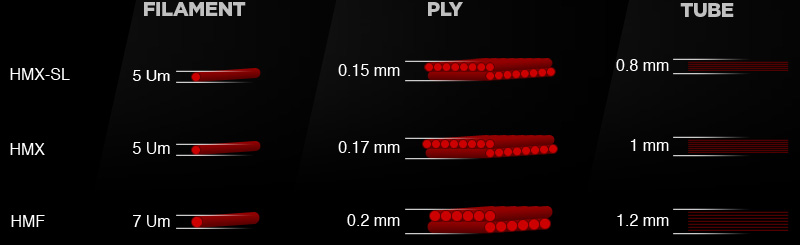
First, Here are the types of Carbon Fiber used by Scott.


HMF CARBON FIBER

HMF carbon fiber is used to maximize strength and to keep weight low. This material has an optimal blend of stiffness and strength that offers the best riding session. The know-how of SCOTT engineers is utilized in order to create the perfect lay-up with orientation and fiber size. HMF fiber will offer superior strengh compared to the industry standard. 

HMX CARBON FIBER

SCOTT has improved upon the now conventional high modulus carbon fiber, HMF, used throughout the bicycle industry. HMX is a fiber blend used by SCOTT, and is 20 percent stiffer than its HMF counterpart for the same weight. This unique material allows SCOTT engineers to create incredibly light bikes with excellent riding characteristics. The cost of HMX, however, is three times that of HMF, and is therefore reserved for our high end Premium,Team Issue, and RC frames.

HMX-SL

HMX-SL utilizes Nano-technology, which incorporates a carbon nanotube reinforced epoxy resin as well as T1000G carbon fiber. The carbon nanotubes offer an improved strength perpendicular and at off-axis to fiber direction, which allows for a better inter-laminar shear strength. The cohesion between the fibers is improved compared to our industry leading HMX carbon blend offering an unprecedented resistance. T1000G is the world's highest tensile strength fiber. This fiber is traditionally used for aerospace or defense applications. Strategic use of this new material results in a frame that is lightweight without compromise in power transfer.

HMX filaments are both stiffer and smaller in diameter than those of HMF carbon. Because of this, an HMX frame can be built of tubes with thinner wall thicknesses to achieve the same stiffness of a corresponding HMF frame.

The final difference between a HMX and HMF frame is mainly the weight. A HMF frame is about 14% heavier than a HMX frame.

HMX-SL IS 8.5% LIGHTER ON A FULL FRAME THAN HMX
HMX IS 14% LIGHTER ON A FULL FRAME THAN HMF


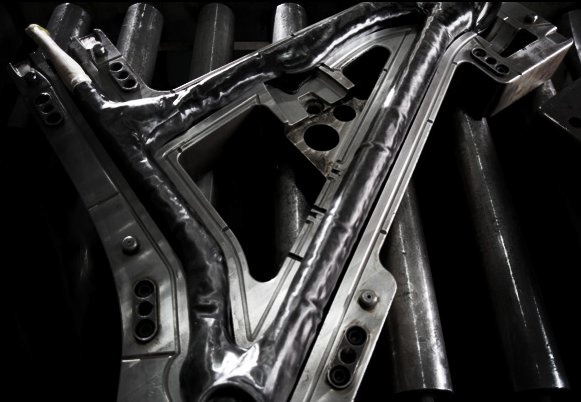
SCOTT carbon frames are all designed, engineered and virtually tested prior to opening new molds. Concepts are first validated by our team of designers to ensure that they integrate with the overall SCOTT ethos. Our engineers then build a 3D model of the frame which can then be analyzed by the most advanced FEA and CFD industrial tools, as well as our own, in-house developed, kinematic and composite structure software. These tools allow our engineers to assess a frame's weight and volume, stress distribution, stiffness rating, aerodynamic performance, suspension characteristics with regard to kinematics and spring rates, and fiber ply layup schedules.


Once the virtual design and engineering process is completed, the first mold can be opened. SCOTT engineers layup the initial frame themselves. The resulting prototype frames then go directly from the mold to the test lab to assess frame strength and stiffness. The frame will then go through several cycles of layup refinement and testing until all performance targets are met.


Prior to mass production, a pilot run of frames is produced to validate all tooling and layup schedules. These pilot frames are then subjected to further lab testing, before being ridden in real world conditions. It is at this point that our professional teams and riders enter the equation, pushing the bikes to their limits and providing valuable feedback.


The actual step-by-step process is as follows:


Design & Engineering -  Scott knows that carbon must be optimized in every respect in order to achieve top performance standards and function specific designs. Priority is placed on engineering and collaboration between Scott's greatest thinkers.


Precision Trimming of the HMX Carbon Fiber - The key to a superior layup begins with the engineered shapes that must first be laser cut.


Preparing The Layers - There are over 200 pre-prepared pieces of all sizes that are necessary to
construct a single Bicycle frame. Precision over these many repetitions is key to success.


Preforming & IMP (Integrated Molding Process) - IMP is a process developed by SCOTT engineers that allows for multiple tubes to be created in a single step while managing the layers completely.

During the molding process the layers are compressed while they cure. This adds integrity to the structure and further optimizes the HMX fibers. Scott invented Carbon Welding, a process widely used throughout the bicycle industry.


Machining - In order to assemble a precise final product, areas of the frame with critical tolorences are tuned so that the frame is finished well.


Bonding and Second Step Layup - The process of assembling the various pre-created parts of the fuselage is like finishing a complex puzzle in which care and precision is mandatory to maintain a high quality finished product. This is the final step in constructing a SCOTT frame.


Quality Control - SCOTT engineers maintain a high level of quality control. Destruction testing is performed at intervals throughout a production run. We know the exact serial number each member of the team has had a hand in producing and which day it was made. Without quality control no measure of a quality product can be produced.


Here are some AWESOME bikes from Scott that employ different levels of Carbon Fiber. Click any bike's name for more information!


2015 Scott Solace 10

2015 Scott Addict SL


2015 Scott Genius 900 Tuned


VIDEO REVIEW


Circle City Bicycles and Fitness
5506 Madison Ave.
Indianapolis, IN 46227
(317) 786-9244